
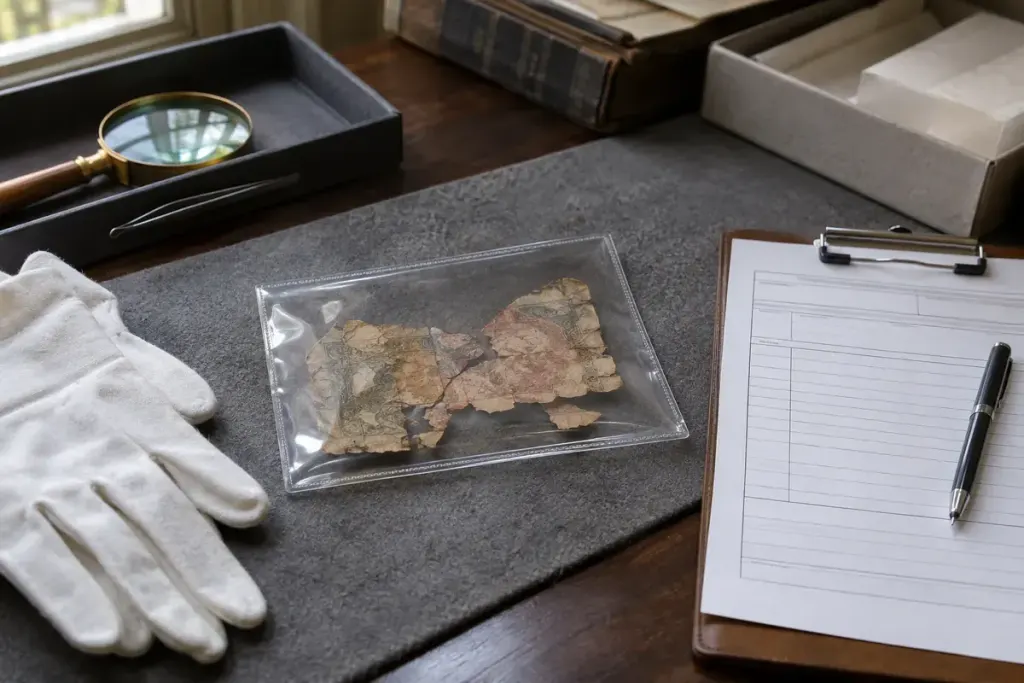
A note that has been through the washing machine and a bundle recovered from a fire can both look unusable. They may nevertheless require quite different routes for assessment. Before trying to flatten, clean or reconstruct damaged cash, find out who is supposed to examine it.
Start with the country and the condition
For United States paper currency, the Bureau of Engraving and Printing runs a mutilated currency redemption service. Its definition includes notes with half or less remaining and notes whose condition makes their value questionable. Ordinary wear and severe damage should not be treated as interchangeable categories.
The BEP describes two routes to possible full-value redemption: identifiable notes with clearly more than half remaining and sufficient relevant security features, or smaller remnants accompanied by evidence satisfying the examiner that the missing portion was destroyed. That is an examination standard, not a promise based on a photograph or a home measurement.
Keep the evidence with the money
A useful first record is a short account of what happened, when it happened and how the material was recovered. Keep different incidents separate. If a family member found the cash, ask them to write down what they remember before packaging changes obscure the original condition.
Do not turn the kitchen table into a restoration bench. Read the receiving authority’s current packaging instructions before separating fragile layers, removing material from a container or sending anything. The condition of the fragments and their surrounding material may matter to the assessment.
For a straightforward worn note, ask a bank which exchange route it accepts. For severely damaged US notes, consult the BEP’s submission instructions directly. A bank teller’s inability to accept a fragment is not, by itself, a specialist decision on its redeemable value.
Three details to confirm before sending
- Which authority handles this currency and this type of damage?
- What form, supporting explanation and packaging does it require now?
- How will you retain a submission record and track correspondence?
Keep an expected reimbursement out of your available-cash budget until the claim is decided. Coins, foreign notes and damaged securities have their own procedures; the US paper-currency process does not automatically cover them.