
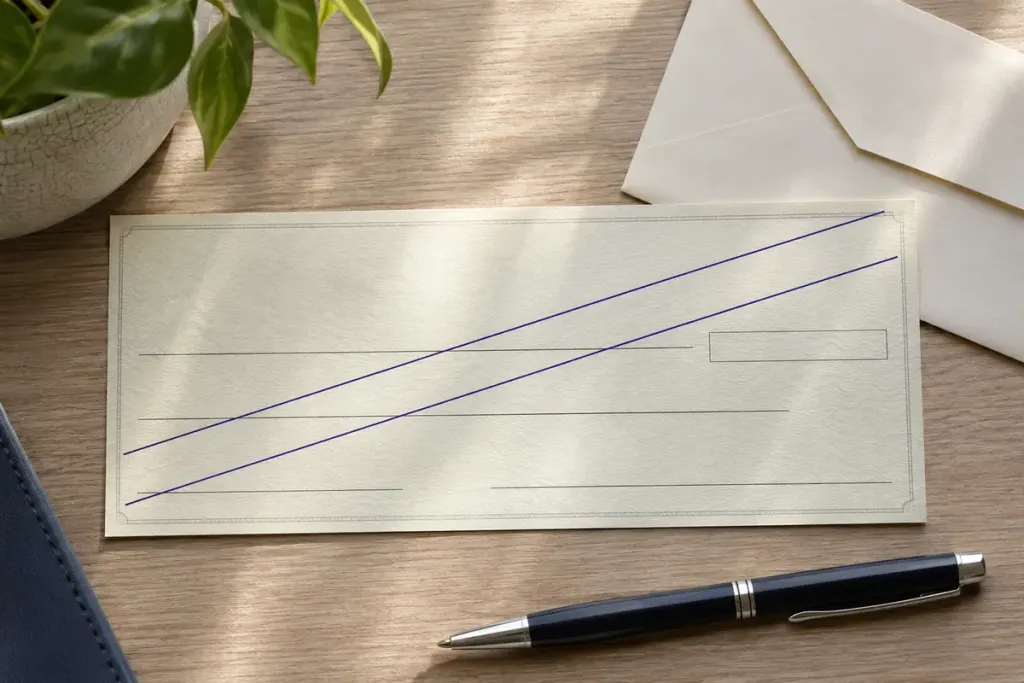
The two lines across a cheque are easy to overlook when the amount is the part you care about. Add the words “account payee”, however, and the intended route of that payment becomes important: the cheque is meant for the named recipient’s account.
For UK banking, AIB’s current-account guide explains that an account-payee cheque cannot be cashed and must be paid into the account of the person named on it. This is a specific banking context; do not assume that a cheque issued in another country follows identical rules.
Read the name before planning the deposit
Imagine a refund cheque made payable to a parent who cannot visit a branch. Paying it into an adult child’s account is not simply another way to help. Contact the bank about an approved way to deposit it for the named recipient, or ask the issuer whether it can arrange another payment method. Do not alter the payee line yourself.
A name discrepancy also deserves a question before a journey to the bank. A former surname, a business trading name or two named recipients can require different evidence. Describe the wording exactly, without sending a photograph containing account information through an insecure channel.
- Check who issued the cheque and whom it names.
- Read the crossing and any additional restrictions.
- Ask the receiving bank which deposit methods and documents it accepts.
- Keep the issuer’s contact details until the payment is resolved.
The crossing does not promise that the money is good
An account-payee marking controls the destination; it does not certify the issuer’s balance or establish that an unexpected payment is genuine. Follow the bank’s guidance about clearance and availability. Be particularly cautious if someone asks you to return part of an unfamiliar cheque payment by a faster method.
The useful question at the counter is therefore more precise than “Can I put this in?” Explain whose cheque it is, whose account will receive it and what the crossing says. That gives the bank the information needed to explain the correct route.