
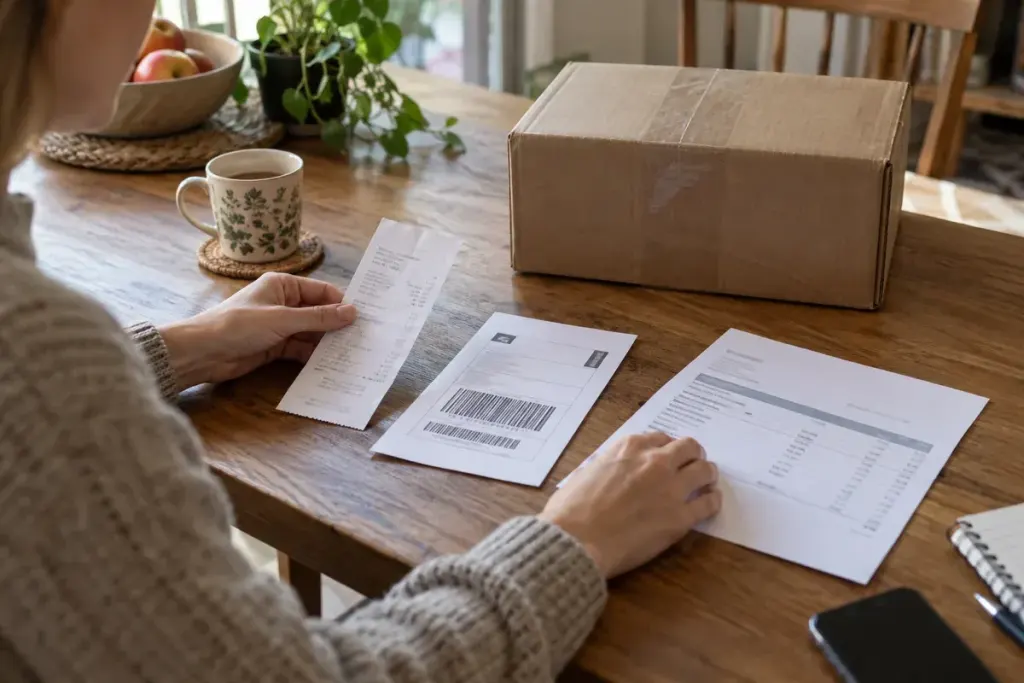
The parcel is back with the retailer and the return email looks reassuring. Yet the original purchase is still on your card statement. Before paying twice, spending the expected refund or opening several complaints, put the transaction into a simple sequence.
A return accepted by a shop and a credit posted by a card issuer are different events. Your useful evidence is the record connecting them: purchase reference, return confirmation, refund amount, refund date and destination payment method.
Make a small reconciliation table
Use one row per returned item. Record the original charge, what the retailer agreed to return, any clearly explained deduction and the amount actually credited. A partial return needs its own amount; the total order value can make a correct refund look wrong.
For example, imagine a 120-unit order containing two items. You return the 45-unit item, while the retailer’s written policy leaves a separate delivery charge unchanged. Compare the expected credit with that particular return, rather than searching for a reversal of all 120 units. This is an illustration, not a statement of what a seller may legally deduct.
Check the destination, not just the date
Look at the original payment account and search its recent activity as well as the latest statement. A refund can appear as a separate credit rather than erase the purchase line. If the card has changed or the account is closed, ask the issuer how that transaction will be handled.
Do not assume an expected refund removes an upcoming payment obligation. Check the issuer’s current instructions and amount due. If a credit remains after everything owed is cleared, ask how to request its return instead of buying something merely to use it up.
Escalate with a clear question
The US CFPB’s refund guidance starts with contacting the seller and explains possible next steps with a credit-card company. Its legal protections and deadlines are US-specific; check the rules and agreement applicable to your account.
A useful message says: “The seller confirmed a refund of this amount on this date to this payment method. I cannot locate the credit. Which reference do you need to trace it?” Attach relevant records through a verified support channel, keeping unrelated account details private.
Finish the row only when the amount is visible and reconciled. That tiny administrative habit turns “I think they refunded me” into a record you can confidently close.