
The account is empty, the replacement card works, and closing the old account feels like the final step. A month later, you need proof of a payment. The transaction used to be one tap away; now you are unsure whether the old login will still work.
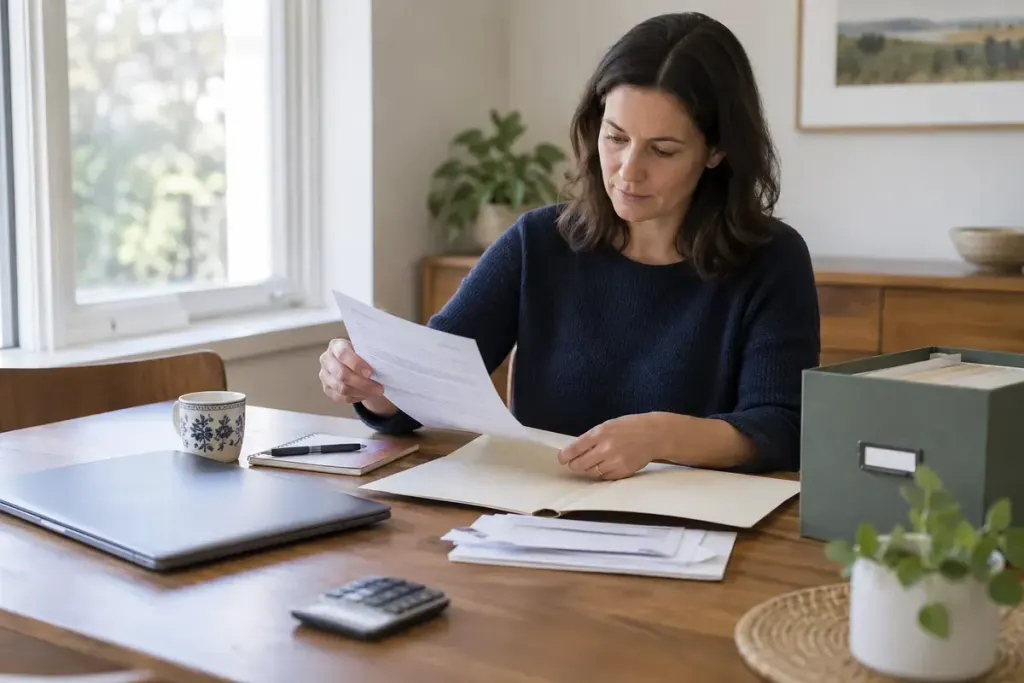
Before requesting closure, make a small record pack. This is an administrative check, not a reason to keep an unsuitable account indefinitely. The aim is to preserve the information you actually need and understand how to request anything missing.
Ask about access before you lose it
Contact the provider through its official website, app or published number. Ask whether online statements remain available after closure, for how long, and whether retrieving older copies involves a fee or identity check. Do not assume the rules for one bank apply to another.
Closure itself may have conditions. The US Consumer Financial Protection Bureau explains that an overdrawn balance may need to be settled first. Check the requirements for your own account and jurisdiction, including pending payments, fees and any linked services.
Build a folder you can search later
- Save the statements covering the periods you need, keeping the original provider files.
- Collect confirmations for unresolved refunds, disputed transactions or important transfers.
- Record how to contact the provider after closure and the reference for your closure request.
- Keep the final statement and written closure confirmation when they become available.
Use filenames that show the provider, account nickname and statement period. Avoid putting a complete account number in a filename that may appear in a shared folder. Store financial documents somewhere access-controlled, and check that downloaded files open correctly before relying on them.
A transaction export can help with searching, but it is not necessarily a substitute for a formal statement. Keep the format required by the organisation requesting proof rather than assuming a spreadsheet screenshot will be accepted.
Retention needs depend on tax rules, disputes and personal circumstances; there is no universal period in this checklist. Make that decision separately. The immediate test is practical: could you find the payment you would most likely be asked to prove without signing back into the account?