
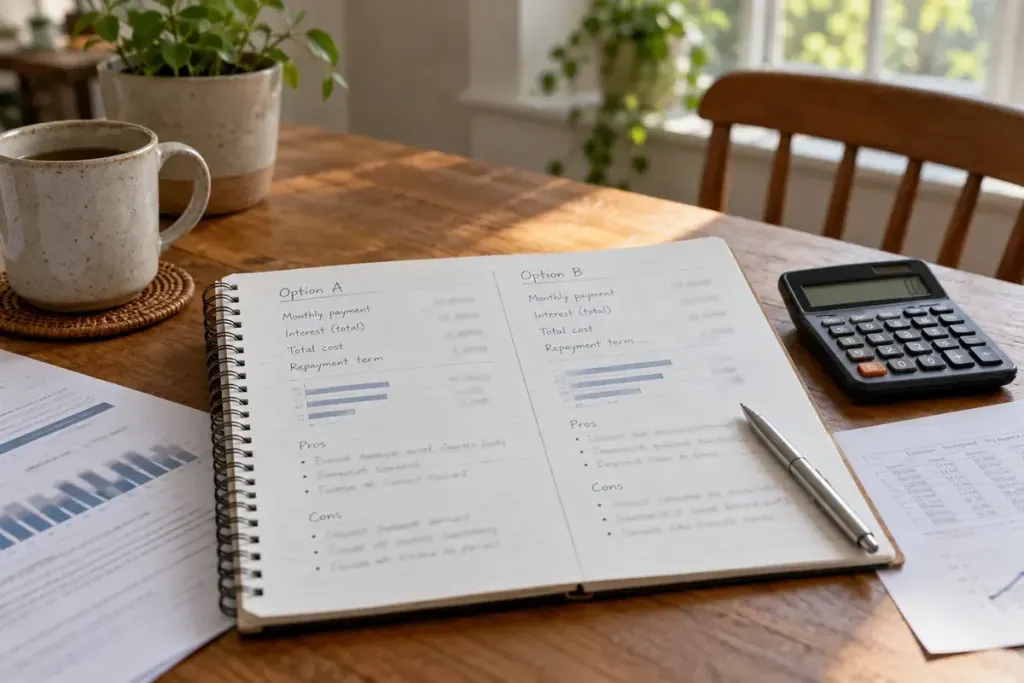
You have some spare money and want it to reduce your mortgage. The transfer itself may be simple. The less obvious question is what the lender will do with the repayment schedule afterwards.
An overpayment can reduce the outstanding debt while the lender recalculates either the regular payment or the time needed to repay it. MoneyHelper’s explanation of mortgage terms describes both possibilities. The arrangement for your particular mortgage needs confirmation from the lender.
Put two possible schedules beside each other
In a hypothetical household, the borrower wants lower monthly commitments because working hours may change. Another borrower wants to keep paying a similar amount and finish sooner. Both might make the same lump-sum payment, yet ask for different outcomes. Neither objective can be inferred from the bank transfer reference alone.
Ask the lender for an illustration showing the outstanding balance after the payment, the contractual monthly amount, the remaining term and the assumptions used for interest. Compare schedules using the same interest assumptions. An attractive total calculated at a different future rate is not a clean comparison.
- Will the money immediately reduce the interest-bearing balance?
- Will the required payment change automatically, and when?
- If you continue paying the old amount, will that count as further overpayment?
- Does formally shortening the contractual term require a separate application?
Also check the allowance period: a calendar year, mortgage year and fixed-rate deal year are not necessarily interchangeable. Ask about early repayment charges before sending money, including how earlier overpayments count towards any limit.
Keep the confirmation with the next statement
Write down what you requested and save the lender’s response. When the payment is processed, reconcile the new balance and next required instalment against that response. Query a mismatch rather than changing a direct debit independently.
Money committed to a mortgage may not be readily available again. Keep immediate bills and access to emergency money in view, and obtain advice appropriate to your circumstances if the choice affects other debts or long-term plans. The useful result is a repayment arrangement you understand, not simply a lower number on one screen.