
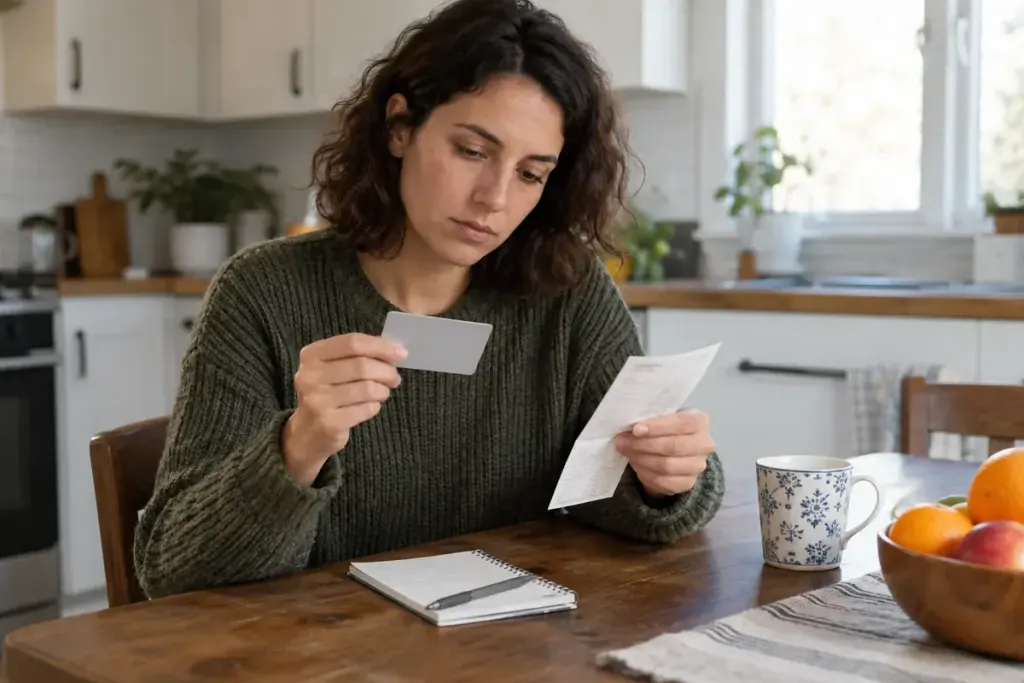
A gift card often gets attention before its first purchase and very little afterwards. The remaining amount may be too small for another obvious purchase, so the card moves to a drawer. A simple balance note can keep that value visible without encouraging you to buy something unnecessary.
After using the card, check the remaining balance through the issuer’s official route. A receipt may show it, but confirm what the number represents. Do not enter card numbers or security codes into an unfamiliar balance-checking website found through an advertisement.
Record the usable balance and the conditions
Keep the issuer, balance, date checked, and any relevant restrictions together. Read the actual terms for expiry, fees, online use, and combining the card with another payment method. Rules differ by country and card type, so a general statement about gift cards may not describe yours.
The FTC’s gift-card guidance recommends keeping the card and receipt and warns against requests to pay someone by sending gift-card numbers. Treat those numbers as access to the value, not as harmless details to share in a screenshot.
Use the balance within a purchase you already need
Suppose a fictional card has 7 remaining and you already plan to buy an eligible item costing 12. If the retailer permits split payment, the card can cover part of that purchase. Ask before checkout rather than assuming every till or website supports the arrangement.
Spending 30 on an unwanted item to avoid forgetting a balance of 7 is not automatically a saving. Keep the original shopping decision separate from the desire to empty the card.
Once the balance is confirmed as used, update the note and retain any record needed for a return. A card can remain relevant if a refund is credited back to it. The useful habit is small: know what remains, know the conditions, and check before discarding the evidence.