
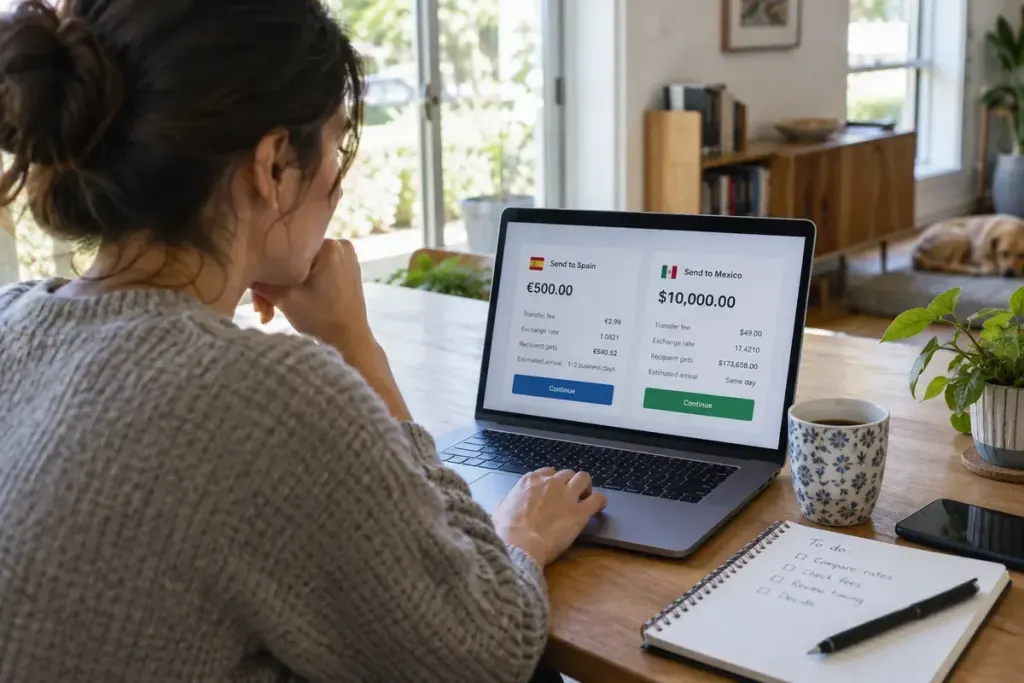
A transfer advertised with no fee can still deliver less money than another service with a visible charge. The exchange rate and any other deductions affect the result. Compare the complete quote rather than choosing from the largest number in the advertisement.
The Consumer Financial Protection Bureau’s money-transfer guide highlights information such as the exchange rate, charges and expected amount received. Its consumer-protection discussion concerns the United States; the practical comparison still requires checking the rules and conditions of your own transfer.
Use the same starting amount
Decide whether you are comparing a fixed total spend or a fixed amount to be delivered. Those are different questions. If one quote adds a fee on top and another deducts it from the transfer, the displayed send amount may not represent the same cost to you.
For a fictional example, suppose two quotes both cost you exactly 1,000 units of the sending currency. One predicts 49,000 units for the recipient; the other predicts 49,500. Before concluding that the second is better, check whether the amounts are final or estimated and whether receiving-side deductions could apply.
Keep speed and access visible
Compare the delivery method, expected timing and what the recipient needs to collect or receive the money. A slightly larger amount is not useful if it arrives through a method the recipient cannot use.
Check quotes close together because exchange rates can change. Save the actual pre-payment information and receipt, including the provider’s contact route for questions. Do not use an old screenshot as a promise about a later transfer.
This is a comparison method, not a recommendation of a provider or a guarantee of a particular rate. The useful question is concrete: for the same total cost and a usable delivery method, what amount is expected to arrive, and which uncertainties remain?